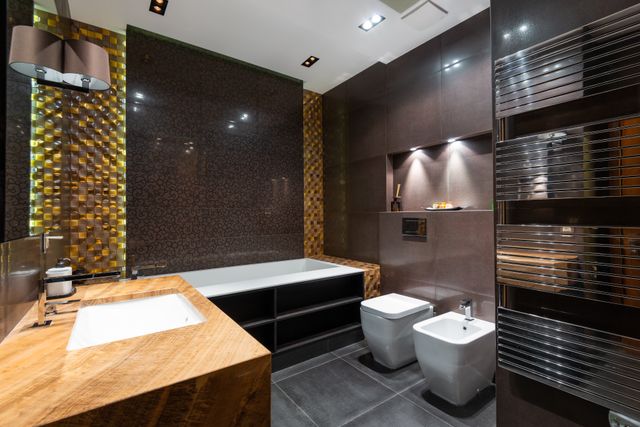
A well-finished bathroom needs more than attractive tiles and stylish sanitary fittings. It must withstand moisture, regular cleaning, temperature changes and daily use while remaining comfortable and easy to maintain.
The materials selected for bathroom walls, floors, ceilings, vanities, shower areas and lighting all contribute to the final result. Choosing the wrong materials can lead to slippery floors, damaged cabinets, mould growth and water leakage.
This guide explores the essential bathroom interior finishing materials for Kenyan homes and explains where each option works best.
1. Bathroom Wall and Floor Tiles
Tiles are among the most important bathroom finishing materials because they protect surfaces and define the room’s appearance.
Porcelain tiles
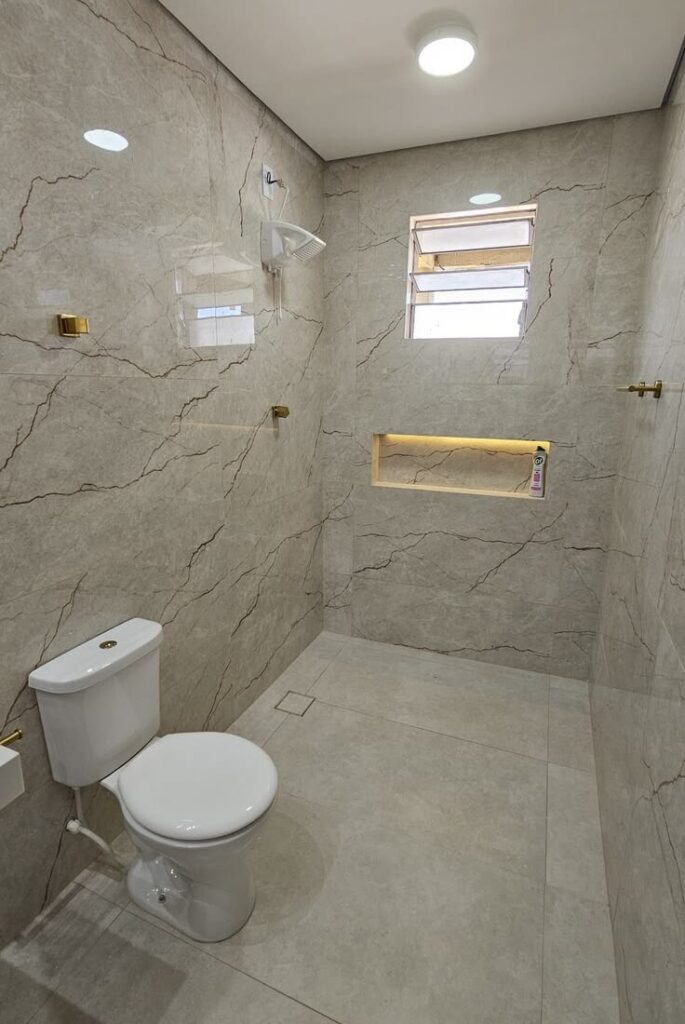
Porcelain tiles are suitable for bathroom walls, floors and wet areas. They generally have lower water absorption than ordinary ceramic tiles and are available in different finishes.
They are particularly useful for homeowners seeking durable flooring with stone, marble or concrete-inspired designs.
Ceramic tiles
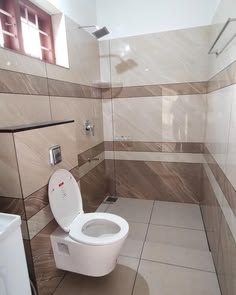
Ceramic tiles are popular for bathroom walls because they are available in many affordable colours, patterns and sizes.
They are easy to clean and can be used for decorative wall sections. However, the manufacturer’s specifications should be checked before using a particular ceramic tile on a floor.
Large-format porcelain tiles
Large-format tiles create a clean appearance with fewer visible grout lines. They are popular in contemporary bathrooms and spacious shower enclosures.
Mosaic tiles
Mosaic tiles are useful for shower floors, niches and decorative areas. Their smaller pieces can make it easier to follow drainage gradients on shower floors.
Natural stone
Natural stone can create a premium bathroom appearance when used on feature walls, vanities or selected surfaces. It may require appropriate sealing and maintenance depending on the stone type.
For more guidance, explore our articles on best non-slip bathroom tiles in Kenya and interior wall finishes in Kenya.
2. Waterproofing Materials
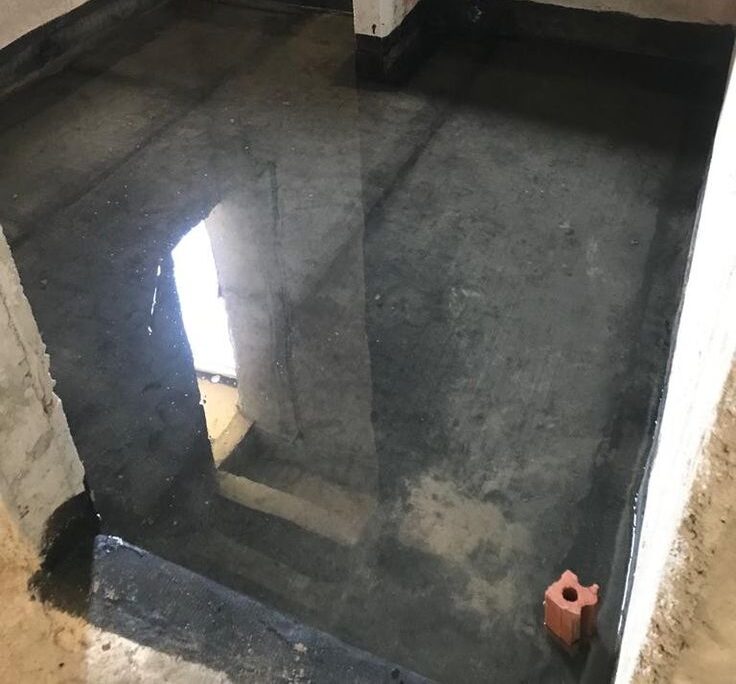
Waterproofing is one of the most important stages of bathroom finishing. Tiles and grout should not be treated as the waterproofing system.
Waterproofing should be properly specified and installed in shower floors, shower walls, wet zones and other vulnerable areas before tiling.
A suitable waterproofing process may include:
- Surface preparation and crack repair.
- Application of an appropriate waterproof membrane.
- Sealing corners and pipe penetrations.
- Correct floor gradients towards drainage points.
- Sealing around floor drains.
- Water testing before tiling where practical.
- Suitable grout and flexible sealant at movement joints.
Skipping waterproofing can result in leaks, damaged finishes and expensive repairs.
3. Bathroom Vanities, Countertops and Storage
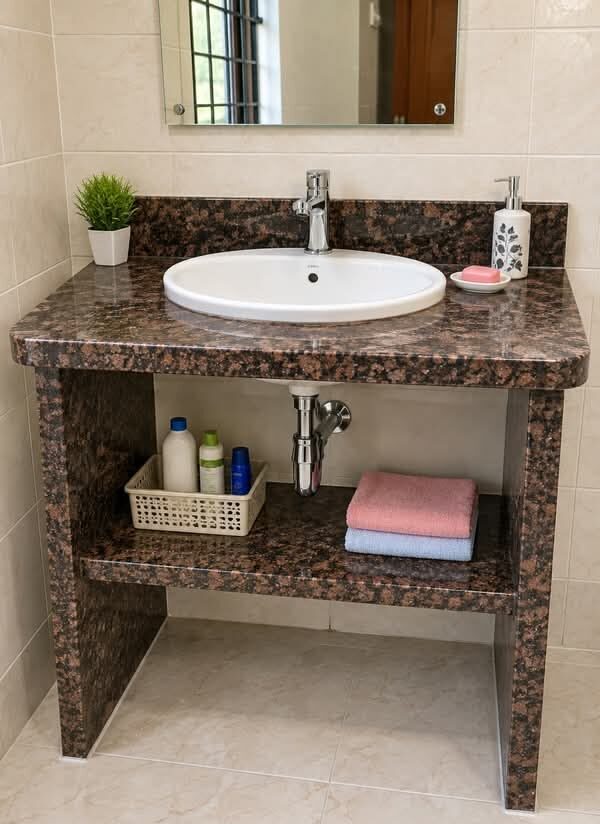
Bathroom cabinets provide storage for toiletries, towels and cleaning products. Their material selection is especially important because bathrooms experience high humidity.
Moisture-resistant MDF
Moisture-resistant MDF with a suitable protective finish can provide a practical vanity solution in well-ventilated bathrooms. It should not be exposed to standing water or persistent leaks.
Plywood and marine-grade boards
Quality plywood and appropriately specified marine-grade boards can be suitable for bathroom cabinetry where moisture resistance is a priority. Proper sealing and edge protection remain important.
Solid wood
Solid wood creates a warm, natural appearance and can work in premium bathrooms when correctly treated, sealed and maintained.
Quartz and stone countertops
Quartz and suitable stone surfaces provide durable countertop options. They are useful around bathroom basins because they can be easy to clean when properly installed and maintained.
Wall-hung vanities
Wall-hung vanities create a lighter appearance and make it easier to clean the floor underneath. They are particularly useful in smaller bathrooms.
For more ideas on selecting coordinated materials, read our interior design materials and finishes guide.
4. Shower Glass and Hardware
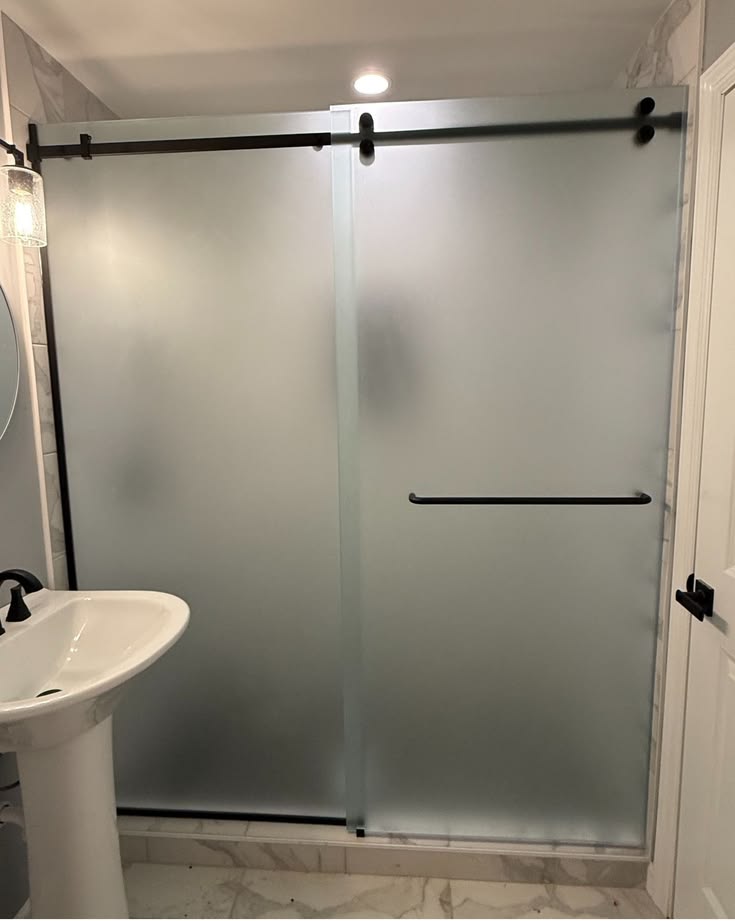
Glass shower screens help separate wet and dry bathroom areas without making the room feel enclosed.
Common options include:
- Frameless tempered glass shower screens.
- Semi-frameless shower enclosures.
- Clear glass for an open appearance.
- Frosted or patterned glass for additional privacy.
- Tinted glass for a distinctive design.
- Stainless steel or matte black hardware.
The glass thickness, fittings and installation system should be specified for the intended application. Correct installation is essential for safety, stability and water control.
A tiled shower niche can also provide convenient storage for toiletries without adding bulky shelves.
5. Bathroom Ceilings and Lighting
Bathroom ceilings should be selected with moisture exposure and ventilation in mind. The appropriate ceiling system depends on the room’s ventilation, ceiling height and proximity to wet areas.
Lighting should be layered rather than relying on one central bulb.
Consider:
- Ceiling downlights for general illumination.
- Mirror lighting for grooming.
- LED strips in suitable niches or coves.
- Decorative lighting in dry zones.
- Appropriately rated fittings for their installation locations.
For additional inspiration, explore our articles on ceiling finishes explained and combining ceiling design and lighting.
6. Ventilation and Bathroom Accessories
Ventilation is essential for managing moisture and reducing the risk of mould.
Where natural ventilation is inadequate, an appropriately sized extractor fan can help remove humid air. Its installation should be planned alongside electrical work.
Other finishing accessories include:
- Heated or illuminated mirrors where appropriate.
- Towel rails and hooks.
- Toilet roll holders.
- Soap dispensers.
- Shower shelves.
- Floor drains.
- Door handles and locks.
- Bathroom mats and storage accessories.
Choose finishes that coordinate with the taps, shower fittings and other hardware.
7. How to Choose the Right Bathroom Materials
Before buying materials, consider the bathroom’s size, layout, ventilation and daily use.
A practical checklist includes:
- Select floor tiles with suitable slip resistance.
- Choose wall tiles that are easy to clean.
- Confirm waterproofing requirements before installation.
- Use moisture-appropriate materials for vanities.
- Select durable shower glass and fittings.
- Plan lighting before ceiling installation.
- Provide adequate ventilation.
- Choose grout and sealants suitable for wet areas.
- Allow for tile cutting and wastage.
- Coordinate colours and textures across the bathroom.
Our modern interior finishes in Kenya article provides more ideas for combining finishes throughout a home.
Professional Bathroom Interior Finishing
Bathroom finishing requires coordination between tiling, waterproofing, plumbing, electrical work, cabinetry and glass installation.
Interior Finishes Kenya supports bathroom and residential interior finishing projects through material selection, design coordination and flooring solutions.
You can also explore our residential interior design services and wall finishes and feature walls when planning a complete home interior.
Areas We Serve
Interior Finishes Kenya supports bathroom finishing projects in Nairobi, including Westlands, Lavington, Karen, Kilimani, Kileleshwa, Runda, Muthaiga, Gigiri, Loresho, Lang’ata, Spring Valley, Lower Kabete, Ruaka, Utawala and Ruiru.
We also consider suitable projects in Mombasa, Kisumu, Nakuru, Eldoret, Naivasha, Meru, Thika, Machakos and surrounding locations, subject to project requirements and availability.
Get a Quote for Bathroom Interior Finishing
Planning a bathroom renovation or completing a new home? Send us your bathroom dimensions, location, photographs and preferred design style.
Our team can help you plan the materials, finishes and installation requirements for a bathroom that is practical, attractive and easy to maintain.
Call or WhatsApp: 0717 044 443 / 0739 255 050 / 0725 021 709
Email: info@interiorfinishes.co.ke
Request a quotation: https://interiorfinishes.co.ke/get-a-quote