Gypsum Ceiling Designs in Kenya: Modern Ideas for Homes and Offices
Gypsum ceiling designs in Kenya offer an excellent way to transform ordinary rooms into attractive, modern and functional spaces. From simple flat ceilings to elegant tray designs and decorative floating ceilings, gypsum boards allow homeowners and businesses to create different interior styles.
Today, many property owners choose gypsum ceilings because they offer design flexibility and a smooth finish. In addition, they provide opportunities to incorporate recessed lights, concealed LED strips and decorative ceiling features.
However, choosing the right design requires careful consideration. A ceiling that looks impressive in a large living room may not suit a small bedroom or office. Therefore, you should consider the room dimensions, ceiling height, lighting requirements and overall interior theme before making a decision.
This guide explores popular gypsum ceiling designs in Kenya, modern design ideas, suitable applications, lighting options, estimated costs and practical tips for choosing the right ceiling.
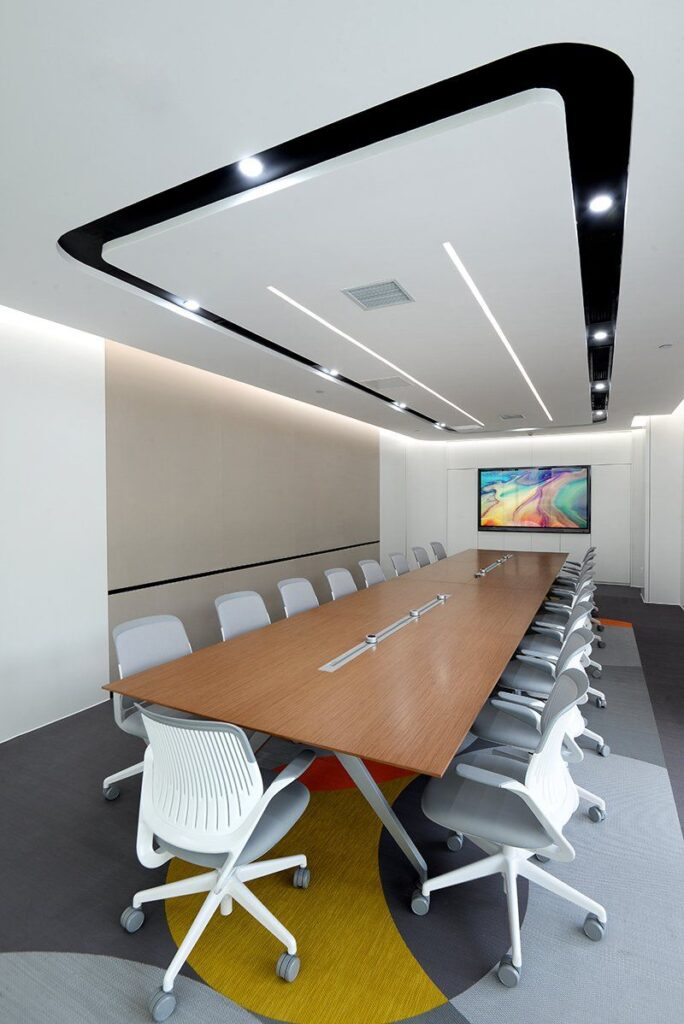
Popular Gypsum Ceiling Designs in Kenya
Gypsum boards support a wide range of ceiling styles. You can choose a simple design for a minimalist interior or combine different shapes and lighting features to create a decorative focal point.
1. Simple Flat Gypsum Ceiling Designs
Simple flat gypsum ceilings provide a smooth, clean and understated finish. They work well in spaces where you want a neat appearance without complicated decorative details.
For example, you can install a flat gypsum ceiling in bedrooms, offices, corridors and small living rooms. Furthermore, you can incorporate recessed downlights to improve the lighting arrangement.
This design also suits homeowners working with a limited budget. Since it requires fewer decorative features, it can offer a practical starting point for a ceiling renovation.
2. Modern Stepped Gypsum Ceiling Designs
Stepped gypsum ceilings feature two or more levels that create depth and visual interest. Installers use different ceiling heights to frame a central section or highlight a particular area.
These designs work especially well in living rooms, dining areas and master bedrooms. Additionally, you can introduce concealed LED lighting along the edges to create a modern appearance.
For smaller rooms, consider a simple stepped design with fewer levels. This approach creates visual interest without making the ceiling look crowded.
3. Tray Gypsum Ceiling Designs
Tray ceilings feature a recessed central section surrounded by a raised perimeter. This arrangement creates a layered appearance and gives the ceiling a distinctive architectural feature.
You can use tray ceilings in spacious living rooms, dining rooms and master bedrooms. Moreover, concealed lighting around the recessed section can create a soft ambient effect.
For a balanced finish, match the tray dimensions to the room layout. You should also consider the position of chandeliers, pendant lights and other ceiling fixtures.
4. Coffered Gypsum Ceiling Designs
Coffered ceilings feature a grid of recessed square or rectangular sections. They create a structured appearance and can complement formal interior styles.
For instance, coffered gypsum ceilings suit large living rooms, executive offices, boardrooms and dining areas. You can also combine them with decorative lighting to emphasise the ceiling pattern.
However, this design needs sufficient ceiling height and careful proportions. In a small room, too many recessed sections may make the space feel visually busy.
5. Floating Gypsum Ceiling Designs
Floating ceilings create the appearance of a suspended ceiling section. Installers achieve this effect through carefully planned levels, recessed sections and concealed lighting.
This style suits contemporary homes, reception areas, hotel lounges and modern offices. Furthermore, you can use a floating feature to highlight a central seating area or a particular part of the room.
Choose a lighting colour that complements the interior finishes. Warm lighting, for example, can create a relaxed atmosphere in residential spaces.
6. Gypsum Ceiling Designs with Cove Lighting
Cove lighting uses concealed LED strips around selected ceiling edges or recessed sections. Instead of exposing the light source, the design directs light onto the ceiling surface.
As a result, the room receives softer ambient lighting. You can also combine cove lighting with stepped, tray and floating ceiling designs.
This option works well in living rooms, bedrooms, hotels, reception areas and restaurants. However, plan the electrical connections and LED positions before installing the gypsum boards.
7. Circular and Curved Gypsum Ceiling Designs
Circular and curved ceilings introduce softer shapes into an interior. They can highlight a chandelier, define a seating area or create a decorative centrepiece.
For example, a circular gypsum feature can complement a dining table or a large living room. Similarly, curved designs can give hotel reception areas and commercial interiors a distinctive appearance.
However, curved ceilings require careful measurements and skilled workmanship. Therefore, discuss the proposed shape and lighting arrangement with your designer before installation.
8. Geometric Gypsum Ceiling Designs
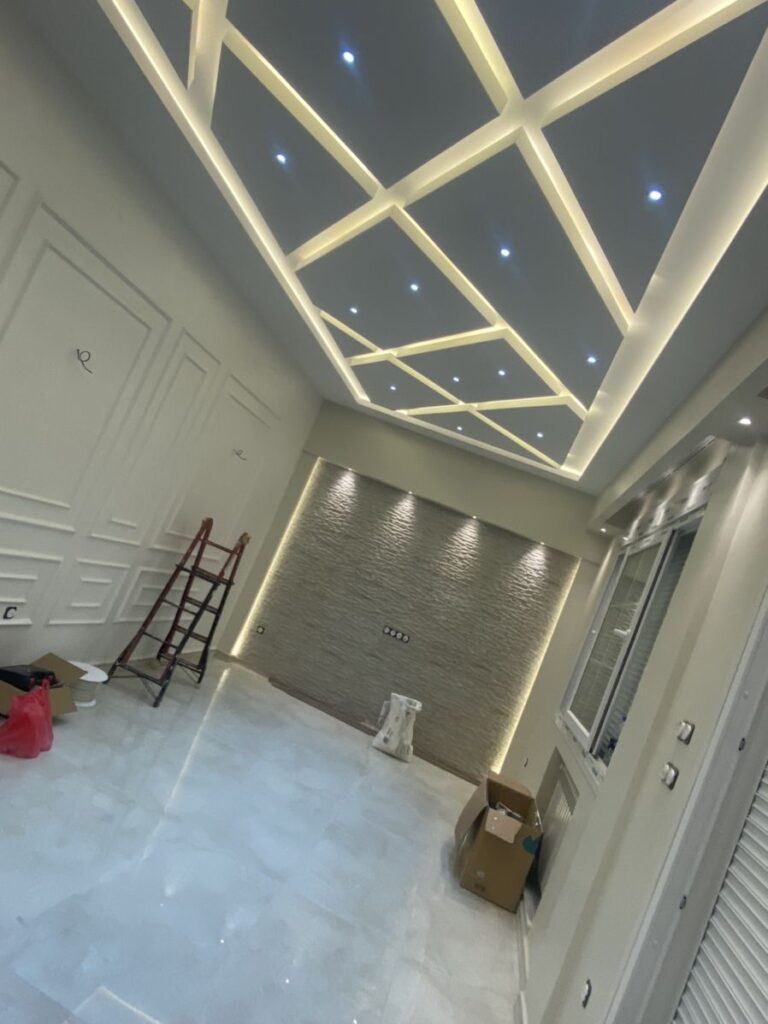
Geometric ceilings use shapes such as rectangles, squares, angles and decorative patterns. They suit contemporary homes, offices, showrooms and commercial spaces.
You can combine different ceiling levels to create a distinctive feature. Additionally, LED strips can highlight selected lines and shapes.
For the best result, keep the pattern proportional to the room. A simple geometric design often creates a more balanced appearance than too many competing shapes.
9. Gypsum Ceiling Designs with Decorative Cornices
Gypsum cornices create a finished transition between the ceiling and walls. They come in different profiles, from simple modern edges to more decorative styles.
You can use cornices in bedrooms, living rooms, dining spaces and offices. Moreover, they can complement both contemporary and traditional interiors.
For a modern finish, choose a simple profile that matches the ceiling design and wall treatment.
10. Recessed Lighting Gypsum Ceiling Designs
Recessed lighting ceilings incorporate light fixtures within planned ceiling openings. They can provide general illumination, task lighting or accent lighting.
For example, you can position downlights around a living room or use selected fixtures to illuminate a reception area. You can also combine recessed lights with concealed LED strips for a layered lighting effect.
Nevertheless, the lighting plan should come before the board installation. This helps the team position openings correctly and coordinate the electrical work.

Modern Gypsum Ceiling Designs for Different Rooms
Every room serves a different purpose. Therefore, the best gypsum ceiling design should complement the room’s function, size, furniture and lighting requirements.
Living Room Gypsum Ceiling Designs
The living room often serves as the main relaxation and entertainment space. Consequently, many homeowners prefer ceiling designs that create a strong visual feature.
Popular options include stepped ceilings, tray ceilings, floating designs and cove lighting. You can also combine recessed downlights with a central decorative feature.
For smaller living rooms, however, a simple flat or lightly stepped ceiling may provide a better result. Avoid excessive decorative details that compete with the furniture and other interior finishes.
Bedroom Gypsum Ceiling Designs
Bedroom ceilings should support a calm and comfortable atmosphere. For this reason, simple tray designs, floating sections and concealed LED lighting work well.
You can also create a feature above the bed to give the room a personalised appearance. Meanwhile, use lighting that supports comfortable evening use.
For smaller bedrooms, consider a simple ceiling border with a few carefully positioned lights. This can create an elegant finish without introducing too many decorative levels.
Kitchen Gypsum Ceiling Designs
A kitchen ceiling should complement the cabinets, lighting and general interior layout. Simple flat ceilings and carefully planned recessed lighting often work well.
However, kitchens experience moisture, heat and cooking-related conditions. Therefore, discuss suitable board specifications, ventilation and moisture management with your installer before selecting materials.
You should also coordinate the ceiling design with kitchen cabinets, worktops and other finishes.
Dining Room Gypsum Ceiling Designs
A dining room can benefit from a ceiling that highlights the dining table. For example, a tray or coffered design can create a defined central feature.
Additionally, you can position pendant lighting or a chandelier within the design. Make sure the ceiling layout and lighting position match the table arrangement.
Office Gypsum Ceiling Designs
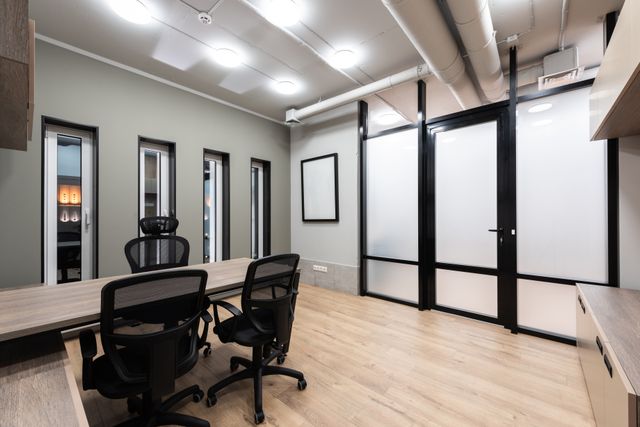
Gypsum ceilings can give offices a neat and professional appearance. Common options include flat ceilings, recessed lighting, simple bulkheads and selected decorative features.
Furthermore, the design should support the office lighting plan and wider building services. For larger projects, coordinate ceiling work with partitions, air-conditioning systems and the overall office fit-out.
Hotel and Restaurant Gypsum Ceiling Designs
Hotels and restaurants often use ceilings to strengthen their interior identity. For instance, a restaurant may use decorative lighting and a feature ceiling above the dining area.
Similarly, hotels can combine tray ceilings, cove lighting and decorative details in reception areas, lounges and guest spaces.
The final design should also consider maintenance, lighting performance and the daily demands of the business.
Reception Area Gypsum Ceiling Designs
The reception area creates the first impression for visitors. Therefore, a well-planned ceiling can complement the reception desk, branding wall and visitor seating.
A simple floating ceiling, geometric design or concealed LED feature can help create a professional appearance. However, maintain a balanced design that supports the overall reception layout.
Latest Trends in Gypsum Ceiling Designs in Kenya
Modern ceiling designs continue to combine decorative features with practical lighting and clean finishes. The following ideas can help you plan a contemporary interior.
Minimalist Ceiling Designs
Minimalist ceilings focus on clean lines, simple shapes and limited decoration. They suit modern apartments, offices and homes where you prefer an uncluttered interior.
Warm LED Cove Lighting
Warm concealed lighting creates a softer atmosphere than exposed decorative lighting alone. You can incorporate LED strips into tray ceilings, stepped ceilings and floating features.
Floating Ceiling Features
Floating sections create a focal point without requiring elaborate decoration across the entire ceiling. They work particularly well in living rooms, hotel lounges and reception spaces.
Geometric Ceiling Patterns
Geometric designs add structure and visual interest. However, use patterns carefully so they complement rather than overwhelm the room.
Gypsum and Wood Combinations
You can combine gypsum boards with selected wooden finishes to introduce warmth and contrast. This approach can work in lounges, offices, restaurants and contemporary homes.
Simple Multi-Level Ceilings
Rather than adding many complicated layers, consider a design with one or two well-planned levels. This can create depth while maintaining a clean appearance.
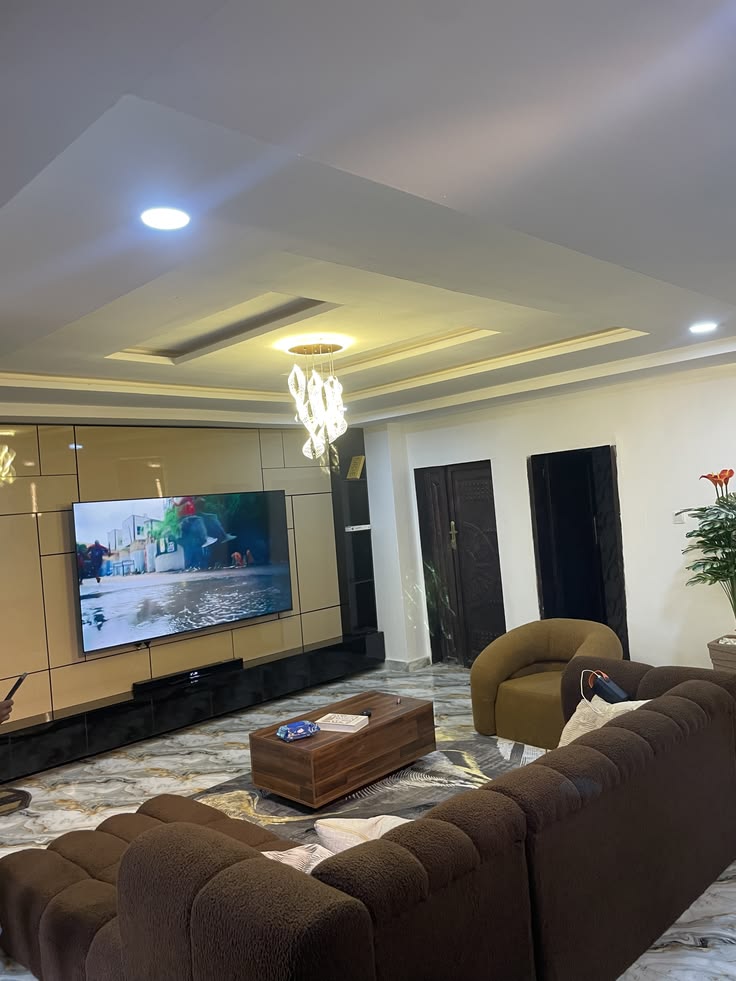
How to Choose the Best Gypsum Ceiling Design
Choosing a ceiling design involves more than selecting an attractive photograph. You should consider several practical factors before approving the final layout.
1. Room size: Large rooms can accommodate more decorative features, while smaller rooms often benefit from simpler designs.
2. Ceiling height: Multi-level designs reduce the available ceiling height in selected areas. Therefore, check the existing measurements before choosing a deep tray or stepped design.
3. Interior style: Match the ceiling with the furniture, wall finishes, flooring and overall colour scheme.
4. Lighting requirements: Decide whether you need recessed downlights, concealed LED strips, pendant lights or a combination of different fixtures.
5. Budget: Compare the design options against your available budget. A simple design can still create an attractive finish without extensive decorative work.
6. Room function: A bedroom, kitchen, office and restaurant have different requirements. Select materials and lighting according to the intended use of the space.
7. Maintenance: Consider how easily you can access lighting components and maintain the ceiling over time.
Gypsum Ceiling Design Costs in Kenya
The cost of gypsum ceiling designs in Kenya depends on the design, ceiling area, materials, labour and lighting requirements. A plain ceiling generally costs less than a decorative design with several levels and concealed lighting.
The following figures provide indicative planning estimates based on published Kenyan cost guides. Actual quotations may vary according to the project specifications and site conditions.
| Gypsum Ceiling Design | Indicative Cost per m² |
|---|---|
| Plain flat gypsum ceiling | KES 1,000–1,500 |
| Simple modern gypsum design | KES 1,500–2,500 |
| Bulkhead or stepped ceiling | KES 2,000–3,500+ |
| Feature ceiling with cove lighting | KES 2,500–4,500+ |
| Complex premium ceiling design | KES 4,000–6,000+ |
These figures serve as initial budgeting estimates rather than fixed quotations. In particular, confirm whether a contractor includes the framework, gypsum boards, jointing, finishing, painting, LED strips, lighting fixtures and electrical work.
What Determines Gypsum Ceiling Design Costs?
Several factors affect the final project budget:
- Design complexity: Curved, geometric and multi-level designs require more detailed work than plain ceilings.
- Ceiling area: Larger rooms require more boards, supporting materials and labour.
- Board specifications: Different board types have different applications and costs.
- Lighting: Recessed lights, LED strips and decorative fixtures may add to the budget.
- Finishing: Painting, decorative cornices and additional surface treatments affect the final quotation.
- Site conditions: Existing ceiling conditions, room height and accessibility may influence installation requirements.
For accurate budgeting, request an itemised quotation based on your preferred design and actual room measurements.
Benefits of Gypsum Ceiling Designs
Gypsum ceilings offer several advantages when you select suitable materials and arrange professional installation.
Improved Interior Appearance
Gypsum ceilings provide a smooth finish and allow different decorative styles. As a result, you can create a ceiling that complements the rest of your interior.
Flexible Design Options
You can choose from flat, stepped, tray, coffered, floating and geometric designs. Furthermore, installers can customise shapes to suit different room layouts.
Lighting Integration
Gypsum ceilings support planned openings and concealed lighting features. This allows you to combine general lighting with decorative and ambient lighting.
Concealment of Services
A properly planned ceiling can conceal selected cables and building services. However, the design should allow appropriate access where future maintenance may require it.
Suitable for Different Spaces
Gypsum ceilings work in residential and commercial interiors. You can use them in bedrooms, living rooms, kitchens, offices, hotels, restaurants and reception areas.

Important Considerations Before Installing a Gypsum Ceiling
Before installation begins, review the design, materials and project requirements with your contractor.
First, confirm the room measurements and available ceiling height. Next, agree on the ceiling levels, lighting positions and decorative details.
You should also discuss the board specifications and supporting framework. For kitchens and other areas with moisture concerns, ask your contractor to recommend suitable materials and ventilation arrangements.
Finally, request a written quotation that explains the work included, project timeline and any exclusions. This makes it easier to compare contractors and manage your budget.
Why Choose Office Interiors for Commercial Gypsum Ceiling Projects?
Office Interiors helps businesses plan modern and functional workspaces in Kenya. The team can coordinate gypsum ceiling designs with other office interior elements, including lighting, partitions, reception areas, boardrooms and flooring.
Furthermore, an integrated design approach helps maintain consistency across the workspace. Instead of treating the ceiling as an isolated feature, the team considers how it works with furniture, finishes and the overall office layout.
Whether you are planning a new office, upgrading a reception area or improving a commercial interior, discuss your requirements with the team.
Areas We Serve Across Kenya
Office Interiors serves clients across Kenya, including Nairobi, Mombasa, Kiambu, Murang’a, Nyeri, Kirinyaga, Nyandarua, Kilifi, Kwale, Tana River, Lamu, Taita-Taveta, Machakos, Kitui, Makueni, Embu, Tharaka-Nithi, Meru, Isiolo, Marsabit, Garissa, Wajir, Mandera, Kisumu, Siaya, Homa Bay, Migori, Kisii, Nyamira, Nakuru, Uasin Gishu, Elgeyo-Marakwet, Nandi, Baringo, Laikipia, Narok, Kajiado, Kericho, Bomet, Samburu, Turkana, West Pokot, Trans Nzoia, Kakamega, Vihiga, Bungoma and Busia.
In Nairobi, service areas include Nairobi CBD, Westlands, Upper Hill, Kilimani, Kileleshwa, Lavington, Parklands, Riverside, Gigiri, Runda, Karen, Muthaiga, Spring Valley, Rosslyn, Ridgeways, Ngara, Hurlingham, South C, South B, Lang’ata, Industrial Area, Embakasi, Donholm, Umoja, Kasarani, Roysambu, Zimmerman, Kahawa West, Kahawa Sukari, Garden Estate, Thome, Thika Road and Mombasa Road.
In Mombasa, service areas include Mombasa Island, Nyali, Bamburi, Shanzu, Kizingo, Tudor, Ganjoni, Likoni, Changamwe, Kisauni, Mtwapa, Diani, Ukunda, Miritini, Port Reitz, Jomvu, Mkomani, Kongowea, Mwembe Tayari and Majengo.
Related Interior Design Services
Explore other interior design and fit-out services that can complement your ceiling project:
- Office Interior Design Services – Professional office layouts, finishes and workspace improvements.
- Gypsum Ceiling Installation Services – Explore gypsum ceiling design and installation solutions.
- Commercial Interior Design – Interior design solutions for different commercial spaces.
- Interior Finishes – Explore flooring, wall finishes and other interior finishing options.
- Interior Renovation Services – Improve existing spaces through renovation and remodelling.
- SUIMAS Interior Designers – Explore professional interior design and fit-out solutions.
Get Modern Gypsum Ceiling Designs in Kenya
Are you planning to upgrade your home or commercial space with a modern gypsum ceiling? Office Interiors can help you coordinate ceiling designs with your wider interior requirements.
Contact the team to discuss your preferred design, project location and budget.

Phone: 0717 044 443 | 0739 255 050 | 0725 021 709
Email: info@interiordesigners.co.ke
Website: https://officeinteriors.co.ke/
Contact page: https://officeinteriors.co.ke/contact/
Frequently Asked Questions About Gypsum Ceiling Designs in Kenya
1. Which gypsum ceiling design is best for a modern home?
Popular options include stepped ceilings, tray ceilings, floating designs and ceilings with concealed LED lighting. However, the best option depends on your room dimensions, ceiling height, interior style and budget.
2. Which gypsum ceiling design is suitable for a small living room?
A simple flat ceiling, slim stepped design or small tray feature can suit a compact living room. Avoid excessive layers because they can make the space feel crowded.
3. Are gypsum ceilings suitable for bedrooms?
Yes. Gypsum ceilings suit bedrooms because they support simple, modern and decorative designs. You can also incorporate concealed lighting to create a comfortable atmosphere.
4. Can gypsum ceilings accommodate LED lights?
Yes. Installers can incorporate recessed downlights and concealed LED strips into suitable gypsum ceiling designs. However, plan the electrical layout before installing the boards.
5. How much do gypsum ceiling designs cost in Kenya?
Indicative prices start at approximately KES 1,000–1,500 per square metre for plain ceilings. More decorative designs can cost KES 2,500–6,000+ per square metre, depending on the materials, lighting and complexity.
6. Which gypsum ceiling design is best for a living room?
Stepped, tray, floating and coffered ceilings are popular living room options. Your choice should match the room size, ceiling height and lighting requirements.
7. Can I combine gypsum ceilings with wooden finishes?
Yes. You can combine gypsum boards with selected wooden finishes to create contrast and introduce warmth into the interior. This combination can work in living rooms, offices and hospitality spaces.
8. Are gypsum ceilings suitable for offices?
Yes. Gypsum ceilings can provide a clean and professional finish in offices. You can also coordinate them with recessed lighting, partitions and other workspace features.
9. What should I consider before choosing a gypsum ceiling design?
Consider the room size, ceiling height, interior style, lighting requirements, budget and maintenance needs. These factors help you select a design that suits the space.
10. Where can I get gypsum ceiling design services in Kenya?
You can contact Office Interiors to discuss office and commercial ceiling requirements. Share your preferred design, room measurements and project location to help the team understand your needs.