Gypsum Ceiling Designs and Installation in Kenya: Modern Ideas, Types and Costs
Gypsum ceiling designs and installation in Kenya can transform an ordinary room into a modern, attractive and functional space. Whether you want a simple ceiling for your home, a stylish living room feature or a professional office ceiling, gypsum offers several design possibilities. It also provides a smooth surface for lighting, decorative details and different interior finishes.
Today, many homeowners and businesses choose gypsum ceilings because they combine style with practical functionality. For example, you can use a flat ceiling to create a clean, simple look. Alternatively, you can choose a stepped, tray or floating design to introduce more character into your space.
However, choosing the right design requires more than selecting an attractive picture. You should also consider the room size, ceiling height, lighting requirements, materials and installation costs. Therefore, this guide explores popular gypsum ceiling designs in Kenya, their applications, estimated prices and the installation process.
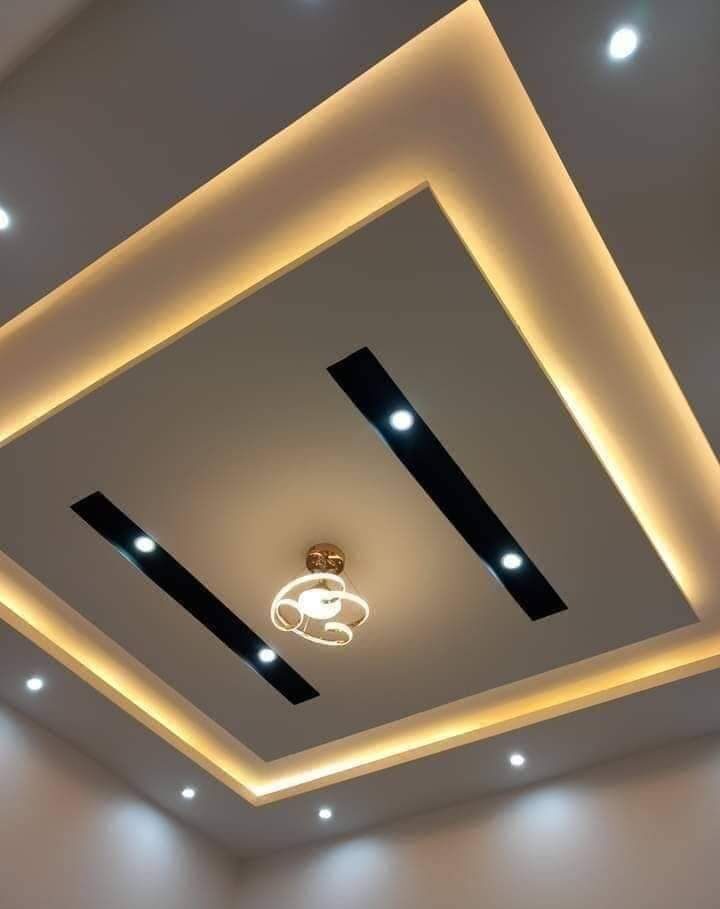
Popular Gypsum Ceiling Designs in Kenya
Gypsum boards allow installers to create different ceiling shapes, levels and decorative features. As a result, you can choose a design that matches your interior style and available budget.
1. Plain Flat Gypsum Ceilings
A plain flat gypsum ceiling creates a clean and seamless appearance. It works particularly well in bedrooms, offices, corridors and other spaces where you prefer a simple finish.
Furthermore, this design offers a practical surface for recessed lights and other ceiling fixtures. Since it uses fewer decorative features, it can also provide a more affordable starting point for your ceiling project.
2. Modern Stepped Gypsum Ceilings
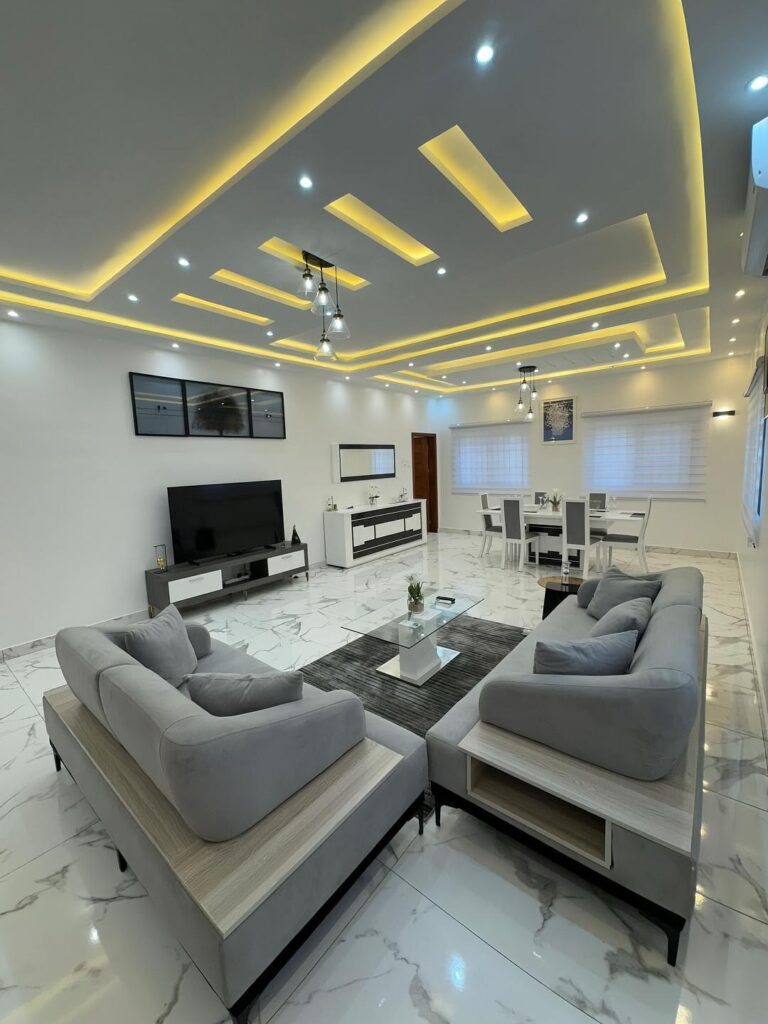
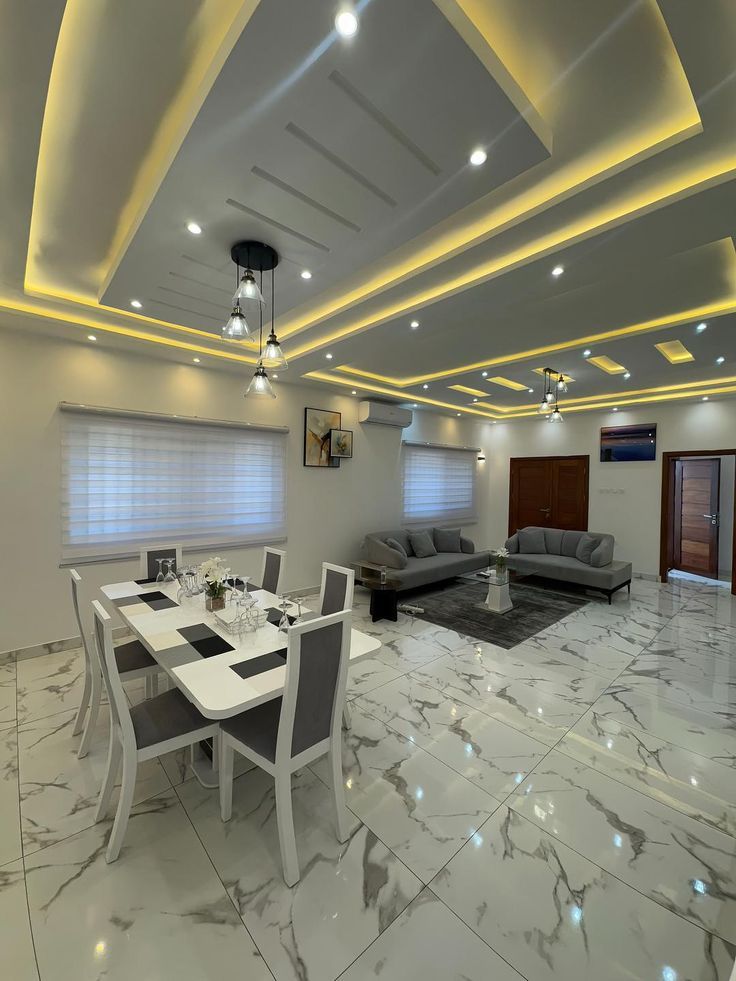
Stepped gypsum ceilings feature two or more levels that create depth and visual interest. You can use the design to frame a central ceiling section or highlight a particular area.
For instance, a stepped ceiling can help define the seating area in a large living room. Additionally, you can incorporate LED strip lighting along the different levels to create a modern appearance.
3. Tray Gypsum Ceilings
Tray ceilings feature a recessed central section surrounded by a raised perimeter. This arrangement creates a distinctive layered appearance without requiring an overly complicated design.
Moreover, tray ceilings work well in master bedrooms, dining rooms and spacious living rooms. You can also add concealed lighting around the recessed section to create a softer atmosphere.
4. Coffered Gypsum Ceilings
Coffered ceilings feature a pattern of recessed square or rectangular sections. They create a structured appearance and can give a room a more formal, elegant finish.
For example, you can use a coffered design in executive offices, boardrooms, dining rooms and large living spaces. However, the installer should consider the ceiling height and room dimensions before recommending this option.
5. Floating Gypsum Ceilings
Floating gypsum ceilings create the appearance of a suspended ceiling section. Installers achieve this effect through carefully planned levels and concealed lighting.
Consequently, the design can create a modern focal point in living rooms, reception areas and commercial interiors. Nevertheless, proper planning helps the ceiling maintain a balanced appearance.
6. Gypsum Ceilings with Cove LED Lighting
Cove ceilings incorporate concealed lighting around selected ceiling edges or recessed sections. Instead of exposing the light source, the design directs light onto the ceiling surface.
This approach creates soft ambient lighting. Furthermore, you can combine cove lighting with stepped, tray or floating ceiling designs.
7. Circular and Curved Gypsum Ceilings
Circular and curved ceilings introduce softer shapes into an interior. They can highlight a chandelier, define a central seating area or create a decorative feature.
However, curved designs require careful planning and skilled installation. Therefore, discuss the intended shape, measurements and lighting arrangement before work begins.
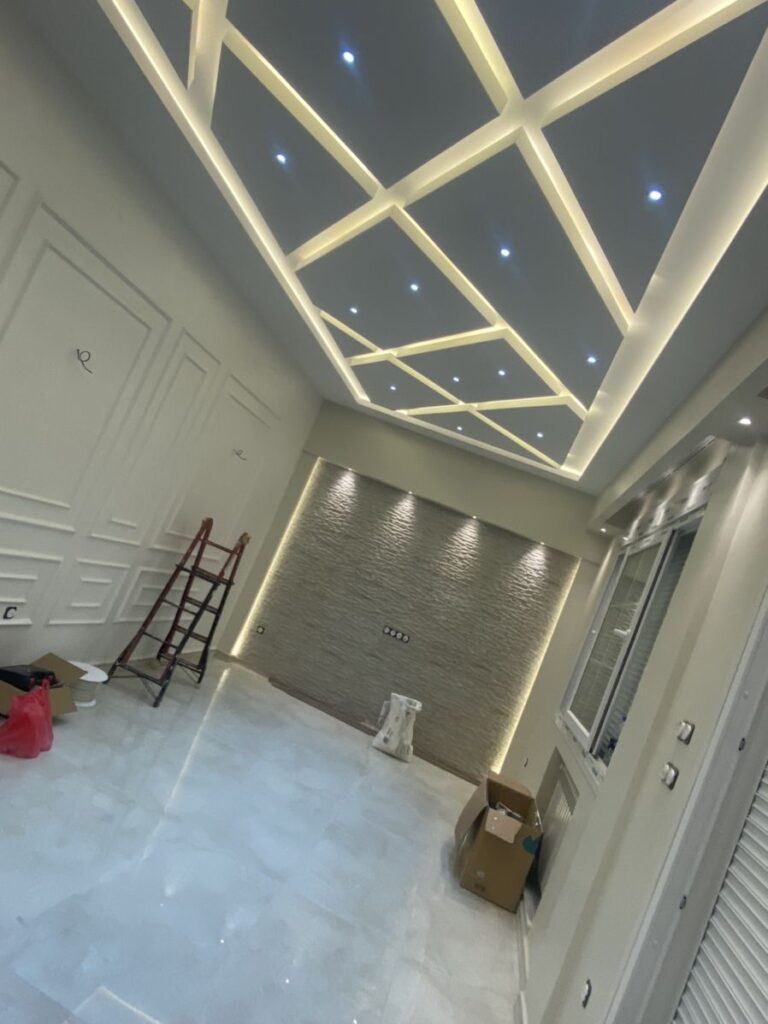
8. Geometric Gypsum Ceiling Designs
Geometric ceilings use patterns such as rectangles, lines, angles and other decorative shapes. They suit contemporary homes, offices, reception areas and commercial spaces.
In addition, you can combine geometric patterns with different lighting arrangements to create a distinctive ceiling feature. Keep the design proportional to the room to avoid visual clutter.
9. Decorative Gypsum Cornices
Gypsum cornices create a finished transition between the ceiling and the walls. They come in different profiles, from simple modern edges to more decorative designs.
As a result, cornices can complement both contemporary and traditional interiors. They also provide a practical finishing detail around the room perimeter.
10. Recessed Lighting Gypsum Ceilings
Recessed lighting ceilings incorporate light fixtures within planned ceiling openings. They can provide general illumination, task lighting or accent lighting.
For example, you can position downlights around a living room or use selected fixtures to illuminate a reception area. However, plan the electrical layout before installing the gypsum boards.
Gypsum Ceiling Designs for Different Rooms
The best gypsum ceiling design depends on how you use the room. Therefore, consider the function, available space and lighting needs before choosing a style.
Living Room Gypsum Ceiling Designs
The living room often serves as the main entertainment and relaxation area. Consequently, many homeowners prefer designs that create a strong visual feature.
Popular options include stepped ceilings, tray ceilings, floating designs and cove lighting. You can also combine recessed downlights with a central decorative feature.
For smaller living rooms, however, a simple flat or lightly stepped ceiling may provide a better result. Avoid excessive decorative details that make the room feel crowded.
Bedroom Gypsum Ceiling Designs
Bedroom ceilings should support a calm and comfortable atmosphere. For this reason, simple tray designs, floating sections and concealed LED lighting work well.
You can also create a feature above the bed to give the room a more personalised appearance. Meanwhile, use a lighting arrangement that supports comfortable evening use.
Kitchen Gypsum Ceiling Designs
A kitchen ceiling should complement the cabinets, lighting and general interior layout. Simple flat ceilings and carefully planned recessed lighting often work well.
However, kitchens experience moisture, heat and cooking-related conditions. Therefore, discuss suitable board specifications, ventilation and moisture management with your installer before selecting materials.
Dining Room Gypsum Ceiling Designs
A dining room can benefit from a ceiling that highlights the dining table. For example, a tray or coffered design can create a defined central feature.
Additionally, you can position pendant lighting or a chandelier within the design. Make sure the ceiling layout and lighting position match the table arrangement.
Office Gypsum Ceiling Designs
Gypsum ceilings can give offices a neat and professional appearance. Common options include flat ceilings, recessed lighting, simple bulkheads and selected acoustic ceiling solutions.
Furthermore, the design should support the office lighting plan and other building services. For larger projects, coordinate ceiling work with partitions, electrical installations and the overall office fit-out.
Hotel and Restaurant Gypsum Ceilings
Hotels and restaurants often use ceilings to strengthen their interior identity. For instance, a restaurant may use decorative lighting and a feature ceiling above the dining area.
Similarly, hotels can combine tray ceilings, cove lighting and decorative details in reception areas, lounges and guest spaces. The final design should also consider maintenance and the daily demands of the business.
Gypsum Ceiling Installation Process in Kenya
Professional gypsum ceiling installation requires proper measurements, suitable materials and careful finishing. Although the exact process varies by design, most projects follow these main stages.
1. Site Assessment and Measurements
First, the installer assesses the room and measures the ceiling area. This stage helps establish the available ceiling height, room dimensions and existing building conditions.
The team should also identify electrical cables, lighting points, plumbing services and other features that may affect the installation.
2. Design and Planning
Next, the designer develops a ceiling layout that matches the room and the client’s requirements. This stage may include ceiling levels, decorative features, lighting positions and finishing details.
For more detailed projects, 3D visualisation can help you understand the proposed design before installation begins. As a result, you can make adjustments early and reduce avoidable changes during construction.
3. Framework Installation
After approving the design, installers prepare and fix the supporting framework. The framework provides the structure that holds the gypsum boards.
Proper measurements and alignment matter at this stage. Therefore, the installer should follow the agreed layout and use suitable supporting components for the project.
4. Gypsum Board Installation
The team then measures, cuts and fixes the gypsum boards onto the prepared framework. Installers should position the boards carefully to achieve a consistent surface.
Additionally, they should plan openings for lighting fixtures and other ceiling installations before closing the relevant sections.
5. Jointing and Surface Finishing
Once the team fixes the boards, they treat the joints and screw points using suitable jointing materials. This process helps create a smoother and more uniform surface.
Afterwards, the installers sand and prepare the ceiling for painting. Careful finishing helps reduce visible joints and uneven areas.
6. Painting and Final Finishing
The next stage involves applying the selected ceiling paint or finish. The team should prepare the surface properly before painting to achieve a consistent result.
Finally, they inspect the ceiling, check the finishing and coordinate the installation of lighting fixtures.
Gypsum Ceiling Prices in Kenya
Gypsum ceiling prices in Kenya depend on the design, materials, labour and project requirements. A plain flat ceiling generally costs less than a detailed design with multiple levels and concealed lighting.
The following table provides indicative planning estimates. Actual quotations may vary depending on the site, material specifications and contractor.
| Gypsum Ceiling Type | Estimated Price per m² |
|---|---|
| Plain flat gypsum ceiling | KES 1,000–1,500 |
| Simple modern gypsum ceiling | KES 1,500–2,500 |
| Bulkhead or stepped ceiling | KES 2,000–3,500+ |
| Feature ceiling with cove lighting | KES 2,500–4,500+ |
| Complex premium ceiling design | KES 4,000–6,000+ |
These figures serve as initial budgeting estimates rather than fixed market rates. In particular, confirm whether a quotation includes the framework, gypsum boards, jointing, finishing, painting, lighting and electrical work.
Estimated Gypsum Ceiling Costs by Room Size
Room size provides a useful starting point when preparing a budget. The following examples use the indicative rates for plain and simple modern gypsum ceilings.
| Ceiling Area | Plain Ceiling Estimate | Simple Modern Estimate |
|---|---|---|
| 10 m² | KES 10,000–15,000 | KES 15,000–25,000 |
| 12 m² | KES 12,000–18,000 | KES 18,000–30,000 |
| 16 m² | KES 16,000–24,000 | KES 24,000–40,000 |
| 20 m² | KES 20,000–30,000 | KES 30,000–50,000 |
| 25 m² | KES 25,000–37,500 | KES 37,500–62,500 |
| 40 m² | KES 40,000–60,000 | KES 60,000–100,000 |
These calculations multiply the estimated square-metre rate by the ceiling area. However, they do not represent confirmed project quotations. Complex shapes, additional framework, lighting and other work can increase the final cost.
Factors That Affect Gypsum Ceiling Installation Costs
Several factors determine how much you will spend on a gypsum ceiling project. Understanding them helps you compare quotations and plan your budget more effectively.
1. Ceiling Design Complexity
A plain ceiling requires fewer decorative details than a multi-level or curved design. Therefore, complex designs generally require more labour, materials and installation time.
2. Room Size
The ceiling area affects the quantity of boards, framework and finishing materials. Larger projects may require more materials, although the final rate also depends on the design and site conditions.
3. Material Specifications
Different gypsum boards and supporting materials come with different specifications and prices. For example, certain rooms may require moisture-resistant boards or other suitable materials.
4. Lighting Requirements
A ceiling with concealed LED strips, recessed downlights or decorative fixtures needs additional planning. Furthermore, electrical work and lighting products may attract separate charges.
5. Labour and Installation Details
The design, site conditions and level of finishing affect labour costs. Curved shapes, multiple ceiling levels and detailed patterns often require additional installation work.
6. Painting and Other Finishes
Some quotations include painting, while others cover board installation and jointing only. Consequently, check the scope carefully before comparing prices.
7. Site Accessibility
Room height, access to the installation area and the condition of the existing ceiling can also affect project costs. Where installers need additional preparation or remedial work, the quotation may increase.
Gypsum Board Types and Material Selection
The right material helps the ceiling perform well under the conditions of each room. Therefore, discuss the intended application with your contractor before purchasing gypsum boards.
Standard gypsum boards suit many ordinary interior ceiling applications. However, moisture-resistant boards may offer a more appropriate option in selected areas where humidity creates additional demands.
You should also consider the supporting framework, jointing materials, fasteners and finishing products. A good quotation should identify the main materials rather than simply state a price per square metre.
Gypsum Ceilings vs PVC Ceilings
Gypsum and PVC ceilings offer different finishes and practical characteristics. Your choice should depend on the room, design preference, maintenance requirements and project budget.
| Feature | Gypsum Ceiling | PVC Ceiling |
|---|---|---|
| Appearance | Smooth, paintable finish | Panel-based finish |
| Design flexibility | Supports many shapes and levels | Depends on available panel designs |
| Lighting integration | Supports recessed and concealed lighting with planning | Depends on panel and installation system |
| Finishing | Usually requires jointing and painting | Often uses finished panels |
| Maintenance | May need repainting or repair | Individual panels may need replacement |
| Design applications | Homes and commercial interiors | Selected residential and commercial spaces |
Overall, gypsum offers considerable flexibility for custom ceiling designs. PVC, on the other hand, provides a different panel-based finish. Compare the complete installation requirements before making your decision.
Common Gypsum Ceiling Installation Problems and How to Avoid Them
Poor planning and workmanship can affect the appearance and performance of a gypsum ceiling. Fortunately, you can reduce many common problems through proper design, suitable materials and careful installation.
Visible Joints and Uneven Finishes
Poor joint treatment can leave visible lines across the ceiling. To prevent this problem, use skilled installers and allow enough time for proper jointing, sanding and surface preparation.
Ceiling Cracks
Cracks may develop when the supporting structure, joints or finishing work do not perform as intended. Therefore, pay attention to framework installation, board fixing and joint treatment.
Sagging Ceiling Sections
Sagging can indicate problems with the supporting framework, fixing arrangements or material selection. Have the installer assess the ceiling structure and follow suitable installation specifications.
Poor Lighting Placement
Incorrectly positioned lights can affect both appearance and functionality. For this reason, agree on the lighting layout before the team installs the boards.
Moisture-Related Problems
Moisture can affect gypsum materials and painted surfaces. Consequently, investigate leaks and ventilation concerns before installing a new ceiling. Also, select suitable materials for the room conditions.
Overly Complicated Designs
A ceiling with too many decorative features can make a small room feel crowded. Instead, select a design that complements the room dimensions, furniture and general interior style.
Gypsum Ceiling Designs for Commercial Spaces
Gypsum ceilings also suit many commercial interiors. In fact, businesses can use them to improve the appearance and functionality of different spaces.
Offices: Simple ceiling layouts, recessed lighting and selected bulkheads can support a clean corporate interior.
Reception areas: Feature ceilings and concealed lighting can help create a welcoming first impression for visitors.
Boardrooms: Well-planned ceiling designs can complement boardroom lighting, ventilation and presentation equipment.
Hotels: Decorative ceilings can strengthen the interior style of reception areas, guest spaces and lounges.
Restaurants: Feature ceilings can help define dining zones and support the overall atmosphere.
Retail spaces: Carefully planned ceiling layouts can complement product displays, lighting and customer movement.
For commercial projects, coordinate ceiling installation with the wider interior design and fit-out plan. This approach helps different elements work together.
How to Choose a Gypsum Ceiling Installation Company in Kenya
The quality of your ceiling depends on the design, materials and installation work. Therefore, take time to assess a contractor before approving a quotation.
Consider the following points:
- Review previous projects: Ask to see completed ceiling installations and examples of similar designs.
- Discuss your requirements: Explain the room function, preferred design, budget and lighting needs.
- Request a clear quotation: Check the material specifications, labour, finishing and exclusions.
- Confirm the installation process: Understand how the contractor will handle measurements, framework, boarding and finishing.
- Discuss the project timeline: Ask for an estimated schedule and clarify any work that may affect other contractors.
- Check communication: Choose a team that explains the design, costs and installation stages clearly.
Most importantly, avoid choosing a contractor based on the lowest price alone. A clear scope, suitable materials and careful workmanship can help you achieve a better project outcome.
Why Choose Office Interiors for Gypsum Ceiling Projects?
Office Interiors supports office and commercial interior design projects in Kenya. The team can help coordinate ceiling designs with wider workspace requirements, including lighting, partitions, reception areas and complete office fit-outs.
Furthermore, an integrated design approach helps maintain consistency across the interior. Instead of treating the ceiling as an isolated feature, the team considers how it works with the furniture, finishes and overall layout.
Whether you are planning a modern office ceiling, a reception feature or a commercial interior upgrade, discuss your requirements with the team.
Areas We Serve Across Kenya
Office Interiors serves clients across Kenya, including Nairobi, Mombasa, Kiambu, Murang’a, Nyeri, Kirinyaga, Nyandarua, Kilifi, Kwale, Tana River, Lamu, Taita-Taveta, Machakos, Kitui, Makueni, Embu, Tharaka-Nithi, Meru, Isiolo, Marsabit, Garissa, Wajir, Mandera, Kisumu, Siaya, Homa Bay, Migori, Kisii, Nyamira, Nakuru, Uasin Gishu, Elgeyo-Marakwet, Nandi, Baringo, Laikipia, Narok, Kajiado, Kericho, Bomet, Samburu, Turkana, West Pokot, Trans Nzoia, Kakamega, Vihiga, Bungoma and Busia.
In Nairobi, service areas include Nairobi CBD, Westlands, Upper Hill, Kilimani, Kileleshwa, Lavington, Parklands, Riverside, Gigiri, Runda, Karen, Muthaiga, Spring Valley, Rosslyn, Ridgeways, Ngara, Hurlingham, South C, South B, Lang’ata, Industrial Area, Embakasi, Donholm, Umoja, Kasarani, Roysambu, Zimmerman, Kahawa West, Kahawa Sukari, Garden Estate, Thome, Thika Road and Mombasa Road.
In Mombasa, service areas include Mombasa Island, Nyali, Bamburi, Shanzu, Kizingo, Tudor, Ganjoni, Likoni, Changamwe, Kisauni, Mtwapa, Diani, Ukunda, Miritini, Port Reitz, Jomvu, Mkomani, Kongowea, Mwembe Tayari and Majengo.
Related Interior Design Services
Explore other interior design and fit-out services that can complement your gypsum ceiling project:
- Office Interior Design Services – Professional office layouts, finishes and workspace improvements.
- Gypsum Ceiling Installation Services – Explore gypsum ceiling design and installation solutions.
- Commercial Interior Design – Interior design solutions for different commercial spaces.
- Interior Finishes – Explore flooring, wall finishes and other interior finishing options.
- Interior Renovation Services – Improve existing spaces through renovation and remodelling.
- SUIMAS Interior Designers – Explore professional interior design and fit-out solutions.
Get Professional Gypsum Ceiling Designs and Installation in Kenya
Planning a new gypsum ceiling or upgrading an existing interior? Office Interiors can help you plan a ceiling design that complements your space, lighting and overall interior requirements.
Contact the team to discuss your project and request a quotation.
Phone: 0717 044 443 | 0739 255 050 | 0725 021 709
Email: info@interiordesigners.co.ke
Website: https://officeinteriors.co.ke/
Contact page: https://officeinteriors.co.ke/contact/
Frequently Asked Questions About Gypsum Ceiling Designs and Installation in Kenya
1. How much does gypsum ceiling installation cost in Kenya?
Gypsum ceiling installation costs vary according to the design, materials and labour. Indicative estimates start at around KES 1,000–1,500 per square metre for a plain ceiling. More detailed designs with multiple levels or concealed lighting can cost considerably more.
2. Which gypsum ceiling design is best for a living room?
Popular options include stepped ceilings, tray ceilings, floating designs and cove LED ceilings. However, the best choice depends on the room size, ceiling height, lighting requirements and interior style.
3. Are gypsum ceilings suitable for bedrooms?
Yes. Gypsum ceilings work well in bedrooms because they support simple, modern and decorative designs. You can also incorporate concealed lighting or a feature above the bed.
4. Can gypsum ceilings accommodate LED lights?
Yes. Installers can incorporate recessed downlights and concealed LED strips into suitable gypsum ceiling designs. However, plan the electrical layout before installing the boards.
5. How long does gypsum ceiling installation take?
The installation period depends on the ceiling area, design complexity, site conditions and finishing requirements. A simple room generally requires less time than a large project with several decorative features.
6. Can I install a gypsum ceiling in a kitchen?
Yes, but you should consider moisture, ventilation and the conditions in the kitchen. Discuss suitable board specifications and material selection with your installer before starting the project.
7. What is the difference between a plain and a modern gypsum ceiling?
A plain gypsum ceiling usually has a flat, simple finish. In comparison, a modern design may include recessed sections, multiple levels, decorative shapes or integrated lighting.
8. Is gypsum better than PVC for ceilings?
Neither option suits every project. Gypsum offers flexibility for custom shapes and paint finishes, while PVC uses finished panels. Compare the appearance, installation requirements, maintenance and budget before choosing.
9. How do I calculate gypsum ceiling costs?
Multiply the ceiling area in square metres by the estimated rate per square metre. However, ask your contractor to confirm additional charges for lighting, painting, framework, decorative details and other project requirements.
10. Where can I get gypsum ceiling installation services in Kenya?
You can contact Office Interiors to discuss office and commercial ceiling requirements. Share your room measurements, preferred design and project location to help the team understand your needs.