Choosing paint colours for a living room is one of the most important decisions in interior design. Colour influences how spacious a room feels, how furniture stands out and whether the interior appears warm, calm, energetic or formal.
A living room may have beautiful furniture and quality flooring, yet still feel disconnected if the wall colours do not complement the other finishes. The goal is not simply to choose a colour you like. It is to create a balanced combination that works with your room’s lighting, furniture, flooring and lifestyle.
If you are wondering how to choose living room paint colours, the 60-30-10 rule, warm neutrals and carefully selected accent colours can provide a useful starting point.
1. Understand the 60-30-10 Colour Rule
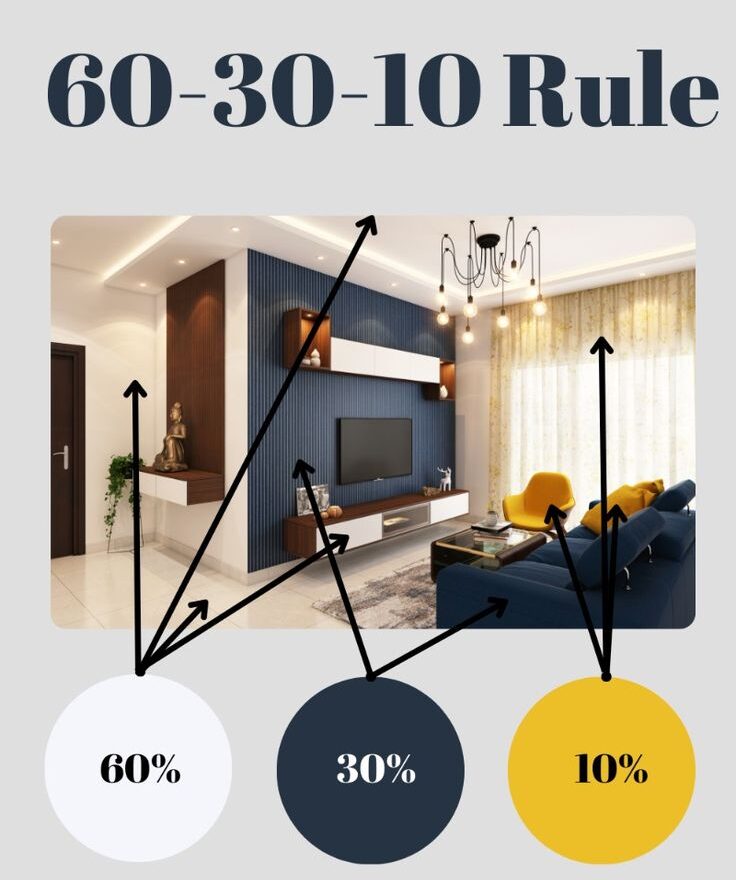
The 60-30-10 rule is a simple interior design principle for distributing colours in a room. It helps create a coordinated colour scheme without making the space look monotonous or overcrowded.
60% – The Dominant Colour
The dominant colour usually covers the largest visual area. In a living room, this is often the wall colour.
Warm neutrals such as beige, cream, greige and warm grey create a flexible base. These colours work with many furniture styles and can make it easier to change accessories later.
For example, cream walls can complement timber flooring, a beige sofa and darker decorative accents. Warm grey can create a contemporary look when paired with black details, wood tones or soft fabrics.
The dominant colour does not have to be plain white. A subtle neutral can introduce warmth while allowing the furniture and décor to remain the main focus.
30% – The Secondary Colour
The secondary colour adds contrast and character. It may appear on curtains, accent chairs, rugs, selected furniture or a feature wall.
For example, a living room with warm beige walls could use muted sage green on an accent chair and curtains. A grey-based scheme might incorporate navy blue through a sofa or decorative textiles.
The secondary colour should complement the dominant shade rather than compete with it.
10% – The Accent Colour
The accent colour provides the final layer of personality. It may appear in cushions, artwork, lamps, decorative objects or small sections of a feature wall.
Terracotta, navy, muted pastels, mustard and deep green can all work as accent colours when used thoughtfully.
The 60-30-10 rule is a guide, not a strict mathematical requirement. A room may use more than three colours, provided the overall combination feels intentional.
2. Choose a Colour Palette That Suits Your Living Room
Warm Neutrals for a Flexible Interior
Beige, cream, greige and warm grey are popular because they coordinate with a wide range of finishes.
They are particularly useful where the living room contains several existing elements, such as timber furniture, patterned curtains, a stone feature wall or a decorative ceiling.
Warm neutrals can also provide a timeless foundation. If you later change the sofa or cushions, the wall colour may still work with the new décor.
Sage Green for a Calm, Natural Feel
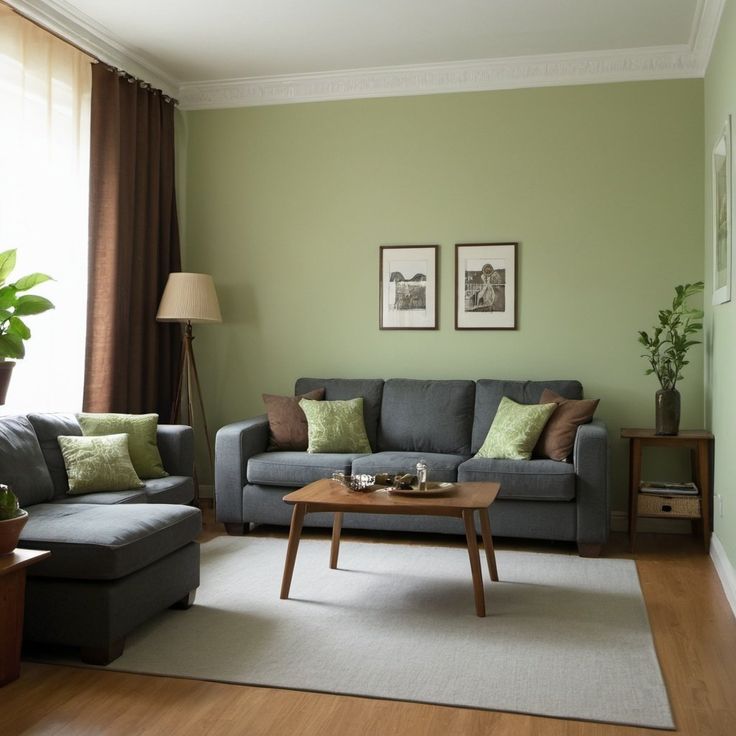
Sage green introduces colour without being overly intense. It pairs well with cream, warm white, timber and natural textures.
It can be used on a feature wall, selected built-in shelving or through accessories. In a smaller living room, using sage green as a secondary colour may help preserve a light and open appearance.
Terracotta for Warmth and Character
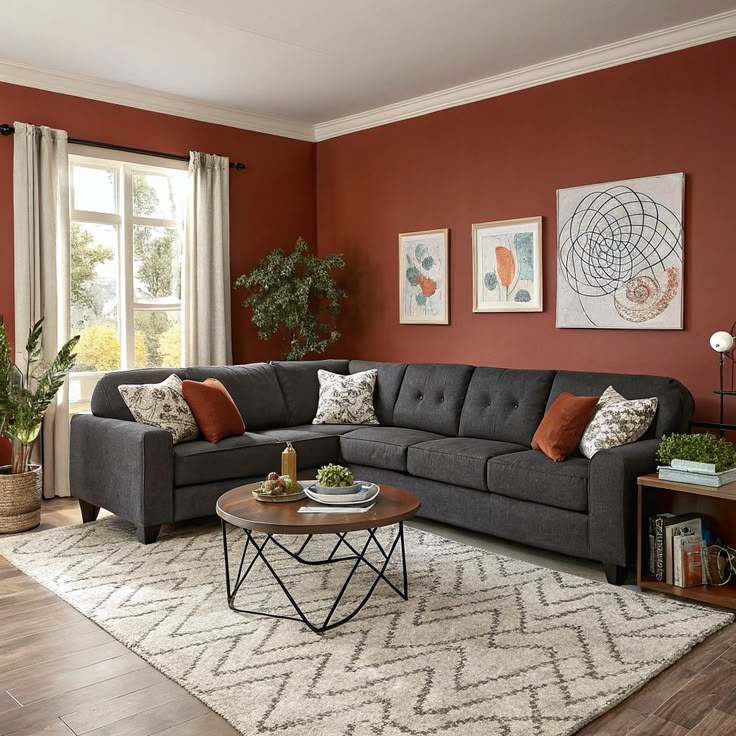
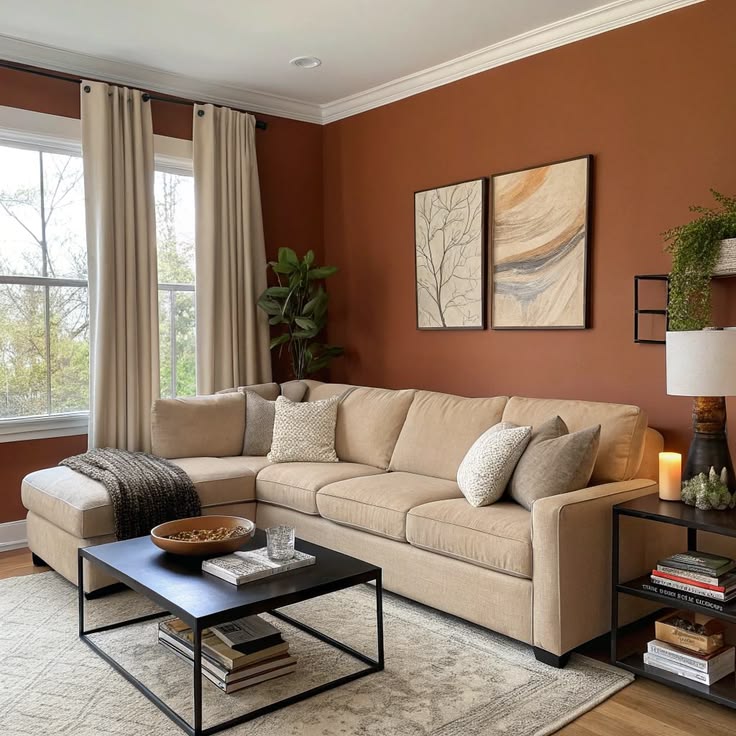
Terracotta is an earthy shade that can bring warmth into a living room. It works well with cream, beige, natural timber and muted green.
It may be suitable for a feature wall or accent accessories. In rooms with limited natural light, consider using a softer terracotta rather than a very dark or saturated shade.
Navy Blue for a Contemporary Look
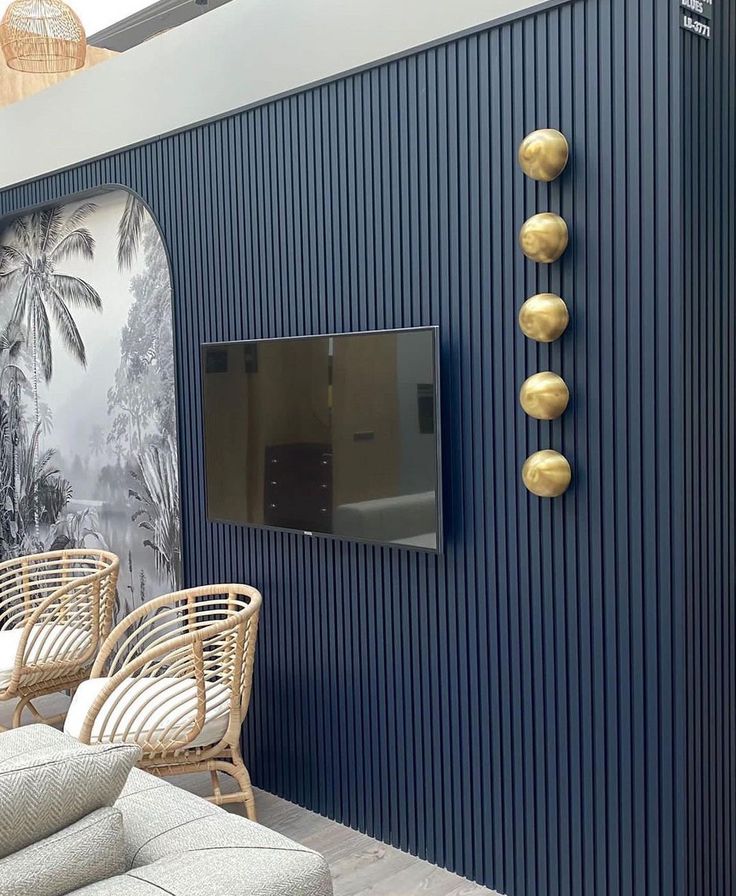
Navy can introduce depth and sophistication. It often works well with white, warm grey, brass details and timber.
Because navy is a strong colour, it is worth testing it before applying it across a large wall. A smaller accent area may be enough to create the desired effect.
3. Consider the Natural Lighting in Your Room
Paint colours can appear different depending on the direction and amount of daylight entering the room.
A colour that looks warm in a brightly lit showroom may appear cooler or darker in a home with limited daylight.
Before choosing paint:
- Observe the room in the morning, afternoon and evening.
- Consider whether the windows face a bright or shaded direction.
- Check how curtains affect the amount of light entering.
- Test paint samples on more than one wall.
- Review the samples under your planned artificial lighting.
Rooms with limited natural light may benefit from lighter warm neutrals. However, this does not mean that every dark room must be painted white. A carefully selected warm shade can still create a comfortable atmosphere.
4. Match Paint Colours With Flooring and Furniture
Paint should be selected alongside the room’s permanent finishes wherever possible.
For example, a living room with warm timber flooring may work well with cream, beige or warm grey walls. A room with cool grey tiles may need a carefully selected neutral to avoid making the space feel too cold.
If you are choosing new flooring, our flooring solutions can help you explore different materials and finishes.
The same principle applies to feature walls. A decorative wall should complement the furniture, not compete with it. You can explore more ideas in our guide to wall finishes and feature walls.
5. Decide Whether You Need a Feature Wall
A feature wall can introduce colour, texture or a decorative material into the living room.
Popular options include:
- A painted accent wall.
- Textured paint.
- Timber or fluted wall panels.
- Wallpaper.
- Decorative mouldings.
- Stone-look cladding.
The feature wall is often positioned behind the television, sofa or another focal point. However, the best location depends on the room layout.
Avoid adding a feature wall simply because the room feels plain. First consider whether the furniture arrangement, lighting or accessories need improvement.
For more inspiration, explore decorative wall panels for living rooms.
6. Test Paint Samples Before Making a Final Decision
Paint samples are especially important when selecting neutrals. Beige, cream and grey can have undertones that become noticeable once the colour covers a large surface.
A sample may appear slightly pink, yellow, green or blue depending on the lighting and surrounding materials.
Apply samples to a reasonable area of the wall and allow them to dry fully. Compare the colours with the flooring, curtains, sofa and other finishes.
Also confirm the paint type. A colour may be available in different finishes, such as matt, satin or gloss. The finish affects light reflection, appearance and cleaning requirements.
7. Think About Maintenance and Room Use
A living room used by children, pets or frequent visitors may require a paint finish that is easier to clean.
Matt finishes can create a soft appearance, while satin or selected washable finishes may be more practical for areas that need frequent wiping. The correct choice depends on the paint product and the condition of the wall.
For a broader renovation, coordinate painting with ceiling works, flooring, lighting and wall finishes. Completing these activities in the right sequence can help prevent damage to newly finished surfaces.
Professional Painting and Interior Finishing in Kenya
Interior Finishes Kenya can help homeowners select paint colours and coordinate them with flooring, feature walls, ceilings and other interior finishes.
Whether you are refreshing a living room in Nairobi or completing a full home interior project, the right colour scheme can help create a space that feels cohesive and comfortable.
Areas We Serve
Interior Finishes Kenya provides interior design, painting, wall finishes, flooring, gypsum ceilings and interior fit-out services across Nairobi, Kenya and selected locations throughout East Africa.
Within Nairobi and its surrounding areas, we serve clients in Westlands, Lavington, Karen, Kilimani, Kileleshwa, Runda, Muthaiga, Gigiri, Loresho, Lang’ata, Spring Valley, Lower Kabete, Ruaka, Utawala and Ruiru.
We also undertake projects in major towns and cities across Kenya, including Mombasa, Kisumu, Nakuru, Eldoret, Naivasha, Meru, Thika, Machakos and other surrounding areas.
Whether you are planning living room painting, feature walls, flooring upgrades, ceiling finishes or a complete interior makeover, Interior Finishes Kenya is ready to discuss your project requirements.
Beyond these locations, we welcome enquiries for suitable projects throughout Kenya and East Africa. Contact our team to confirm service availability, arrange a project assessment and request a quotation.
Get a Quote for Living Room Painting and Interior Finishes
Choosing the right paint colours can transform your living room, but the best result comes from coordinating colour with the other finishes in the space.
Interior Finishes Kenya can discuss your requirements, assess the room and recommend a suitable finishing approach.
Call or WhatsApp Interior Finishes Kenya:
- Call/WhatsApp: 0717 044 443 / 0739 255 050 / 0725 021 709
- Email: info@interiorfinishes.co.ke
- Request a quote: http://interiorfinishes.co.ke/get-a-quote
Contact the team with your location, room size, preferred colour palette and any existing finishes to request a project quotation.