A good retail display system helps customers find products, allows staff to replenish stock efficiently and makes the shop look organised. The right choice depends on the products being displayed, available floor space, expected loads, customer movement and the brand’s desired appearance.
In Kenya, retailers may need shelving for supermarkets, boutiques, pharmacies, hardware shops, beauty stores, electronics outlets and specialist showrooms. Gondola shelving, wall-mounted shelves and adjustable rail systems each serve a different purpose.
Interior Finishes Kenya helps integrate display systems into a wider commercial fit-out, coordinating shelving with flooring, lighting, wall finishes, signage and customer circulation.
1. Gondola Shelving for Flexible Retail Layouts
Gondola shelving is a freestanding display system commonly used in supermarkets, convenience stores, pharmacies and other retail spaces. Units can often be arranged in aisles, with shelves on one or both sides.
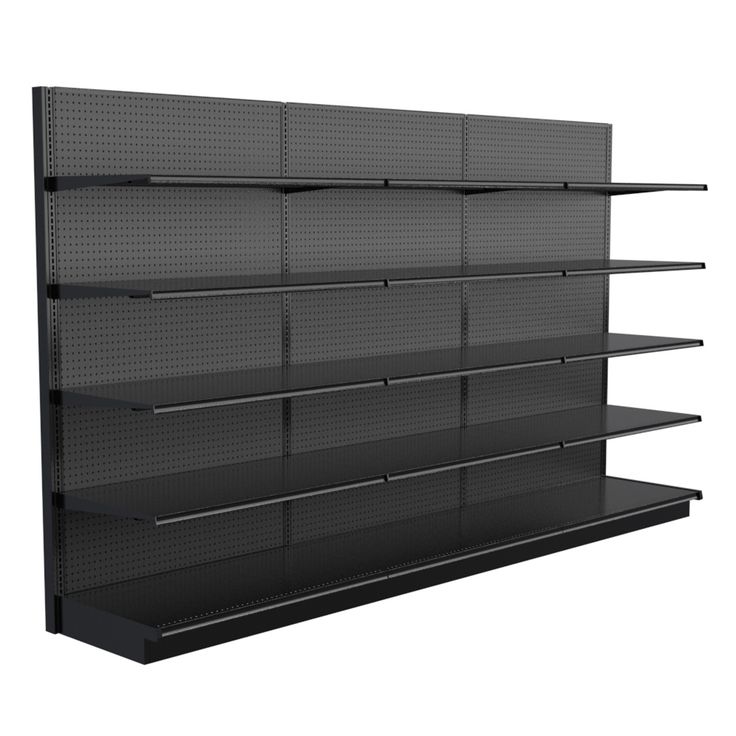
What makes gondola shelving useful?
- Flexible layout: Freestanding units can create aisles and product categories.
- Adjustable shelves: Shelf positions can be changed to accommodate different package heights, where the system allows.
- Product visibility: Merchandise can be organised at different heights for easier browsing.
- Accessories: Depending on the system, hooks, baskets, dividers and ticket strips may be available.
Gondola shelving is useful when the retailer needs to display a wide range of packaged products while making good use of the sales floor.
Materials and finishes
Steel is common because it can support substantial loads when the system is correctly specified. Powder-coated finishes offer a range of colours and can complement the store’s branding.
Wood-effect panels or decorative end panels may be added to soften the appearance, but decorative elements should not compromise the shelving system’s structural performance.
What to check
Ask for the manufacturer’s load rating for the complete unit and for each shelf. Confirm the permitted configuration, anchoring requirements, base stability and any restrictions on changing shelf positions. Do not assume every gondola system can carry heavy products simply because it is made of steel.
2. Wall-Mounted Shelving for Space-Saving Displays
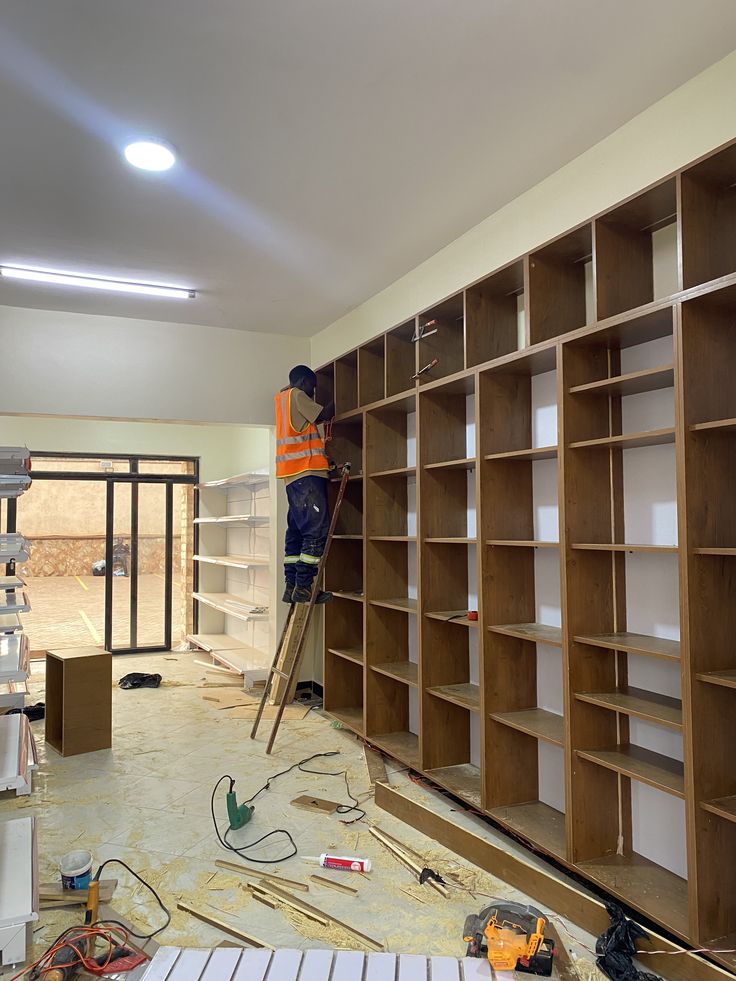
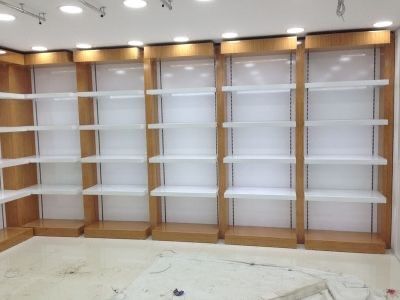
Wall-mounted shelving uses brackets, rails or other supports attached to a suitable wall or structural backing. It can be useful when floor space is limited or when products need to be displayed around the perimeter of a shop.
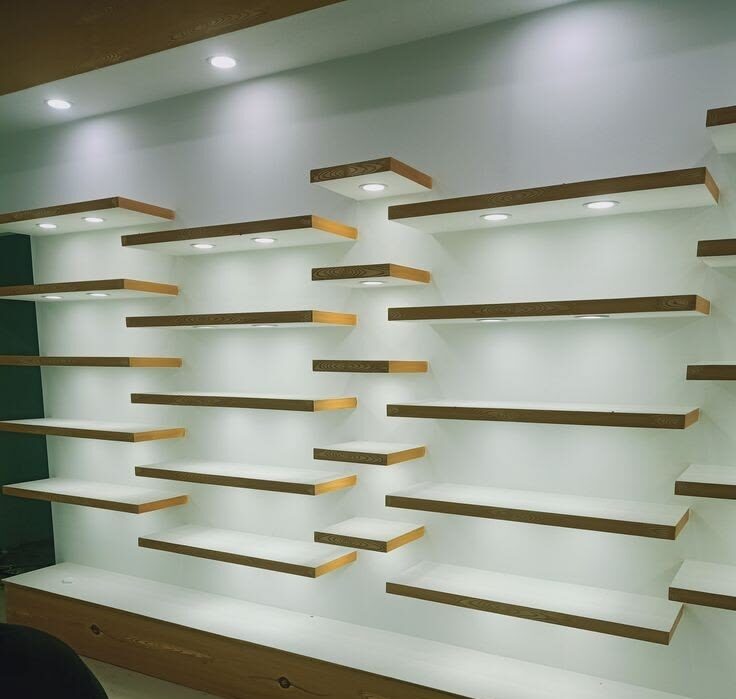
Best applications
Wall shelving works well for:
- Beauty products and personal-care items.
- Packaged goods and smaller accessories.
- Electronics and selected boxed products.
- Decorative merchandise and premium retail displays.
- Showroom products that need a clear visual arrangement.
It can leave the centre of the shop more open for customer circulation, counters or freestanding display units.
Materials and finishes
Powder-coated steel brackets and shelves are useful for many practical retail applications. Laminated boards, timber and decorative panels can introduce warmth in boutiques, homeware stores and showrooms.
The substrate matters. Heavy shelves should not be fixed to unsuitable plasterboard alone. The installer must identify the wall construction, locate suitable structural support and specify appropriate anchors and brackets.
What to check
Confirm the rated capacity of the shelf, bracket and fixing system as a complete assembly. Consider the product weight, shelf depth, bracket spacing and how far the load projects from the wall. Heavy or fragile products may need additional restraints or a different display solution.
3. Adjustable Rail Systems for Changing Displays
Rail systems use vertical standards, horizontal rails or other modular components to support adjustable shelves, hooks and display arms. They are especially useful where stock arrangements change regularly.
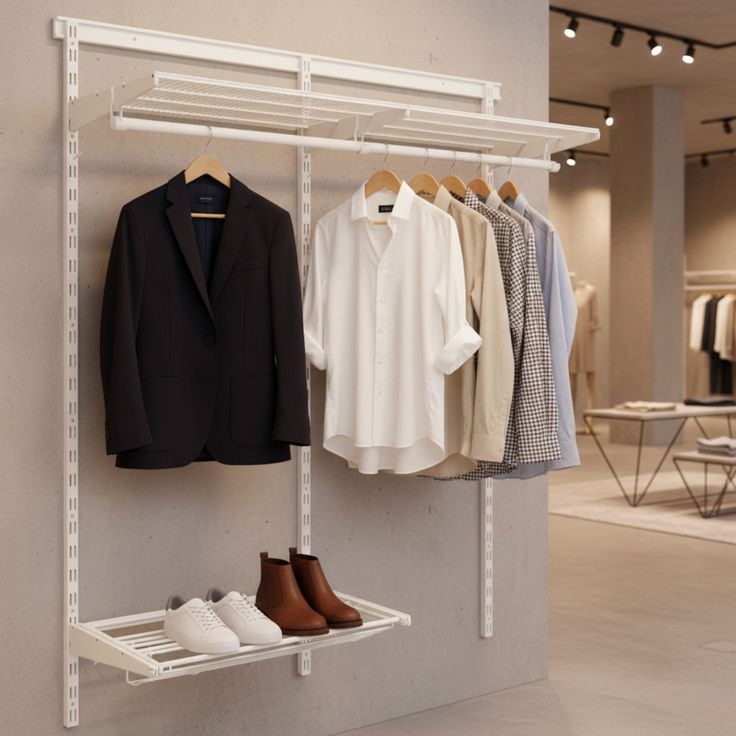
Where rail systems work best
- Clothing shops and fashion boutiques.
- Accessories and lifestyle stores.
- Hardware displays and selected product showrooms.
- Stores that need to reconfigure displays seasonally.
- Back-wall displays where products vary in size.
A rail system can make it easier to move shelves and hanging rails as merchandise changes, provided the chosen system supports those configurations.
Material and finish choices
Metal standards and brackets are common for strength and flexibility. Powder-coated finishes can provide a clean appearance, while timber or laminate shelves may complement the store’s interior palette.
For clothing displays, select hanging rails, arms and brackets suited to the intended load and span. For heavier goods, choose a system designed specifically for that product category rather than adapting a lightweight display rail.
What to check
Ask the supplier for load ratings for the standards, brackets, shelves and rail spans. Confirm fixing points and substrate requirements, and ensure staff can change configurations without compromising stability.
4. How to Choose the Right System for Your Shop
| Requirement | System to consider | Main advantage |
|---|---|---|
| Freestanding product aisles | Gondola shelving | Flexible merchandising across the sales floor |
| Displaying products around the perimeter | Wall-mounted shelving | Uses wall space and can keep floor areas open |
| Frequently changing product arrangements | Adjustable rail system | Shelves and display components can be repositioned |
| Heavy or bulky merchandise | Purpose-rated industrial or heavy-duty shelving | Designed around specific load requirements |
| Premium or lifestyle presentation | Custom shelving combined with suitable modular systems | Allows closer control over materials, colours and brand identity |
The best shop may use more than one system. A supermarket might use gondolas for packaged products and wall shelving for selected categories. A clothing boutique may combine hanging rails with display shelves and feature tables.
5. Materials, Load Capacity and Safety
Display systems should be chosen according to the weight, shape and handling requirements of the products.
Before installation, establish:
- The maximum load per shelf and per complete unit.
- Whether the load rating assumes evenly distributed weight.
- The wall or floor fixing requirements.
- Whether shelves can be adjusted without affecting stability.
- The clearance required for customers, staff and replenishment.
- Whether the display could obstruct exits, accessible routes or fire-safety equipment.
For heavy stock, obtain the manufacturer’s written load information. Do not exceed rated capacity or improvise with unsupported shelves. Where necessary, use a qualified installer to assess the fixing substrate and installation method.
6. Match Displays With the Store’s Interior Design
A display system should support the store’s identity without making the space feel cluttered.
Black or neutral metal finishes may suit industrial and contemporary interiors. Timber-look shelves can bring warmth to boutiques and homeware stores. White shelving can create a clean appearance in beauty and lifestyle retail, while branded end panels can help reinforce product categories.
Lighting also matters. Use appropriate general and accent lighting to make products easy to see without creating glare. Keep price labels readable, maintain clear walkways and avoid placing displays where they block views across the shop.
7. Why Display Systems Should Be Planned as Part of a Complete Fit-Out
Installing shelves without considering the rest of the interior can lead to awkward circulation, poor lighting, inaccessible stock and inconsistent finishes.
Interior Finishes Kenya can coordinate retail shelving with wall finishes, flooring, signage, counters, lighting and the overall shop layout. This helps ensure the display system fits the space and supports how the business operates.
For larger commercial projects, the scope can also include partitioning, custom joinery and broader fit-out coordination. The final proposal should clearly state the display units, materials, installation requirements, exclusions and any supplier-provided load specifications.
Plan Your Retail Display and Fit-Out
Whether you are opening a new shop or refreshing an existing retail space, share your floor plan, product types, approximate shelf loads and preferred finishes with Interior Finishes Kenya.
Call/WhatsApp: 0717 044 443 / 0739 255 050 / 0725 021 709
Email: info@interiorfinishes.co.ke
Get a quote: Interior Finishes Kenya
Related Post Resources
- Commercial Interior Design
- Interior Fit-Out Services
- Reception and Waiting Area Finishes
- Wall Finishes and Feature Walls
- Flooring Solutions
- Gym and Fitness Centre Flooring and Wall Finishes
- Interior Finishes Projects
- Studio Interior Finishes for Recording and Content Creation Spaces
- Interior Design Services — SUIMAS
- Commercial Interior Design
- Office Partitioning Design — SUIMAS
- Cost of Office Renovation in Kenya
- Modern Ceiling Finishes for Offices in Nairobi
- Cost of Commercial Floor Installation in Kenya
- Best Interior Finishing Company in Nairobi